








Last year, within the framework of the 22nd Golden Apricot Yerevan International Film Festival, the Armenian screening of Tamara Stepanyan’s My Armenian Phantoms took place. The film, which had its world premiere at the Berlin International Film Festival, is one of the director’s most personal works. Through family archives, the memory of her father — actor and theatre director Vigen Stepanyan — and a dialogue with Armenian-Soviet cinema, it speaks about both personal and collective memory.
During the discussion that followed the screening, Stepanyan spoke about the extensive archival work behind the film. According to her, when one begins such a process, it has to be carried through to the end — especially when, while watching the films, one realizes that they are true “pearls” that need to be cleaned, preserved, and presented to a new audience. The director noted that Armenian cinema has had outstanding auteurs and remarkable films that deserve to become visible again.
For Stepanyan, the selection of images was not only a historical or film-studies process, but also an emotional one. She recalled how she had watched the same films when she was young and how she rewatched them as an adult. Some images evoked almost the same emotional response in her, and the director allowed those images to lead her. Only later was a more intellectual layer added to that emotional process.
The discussion also touched upon the role of the film’s producer, Céline Loiseau. She noted that one of the reasons she joined the project was that she knew and loved Tamara Stepanyan’s cinema; another was that she knew almost nothing about Armenian cinema and was open to discovering it. Céline Loiseau also played an important role in shaping the film’s structure. At first, Stepanyan was thinking of making a more essayistic film, but the producer encouraged her to make the personal story one of the central axes of the entire narrative.
As a result, My Armenian Phantoms became not only an encounter with the history of Armenian cinema, but also a deeply personal film of farewell, continuing dialogue, and memory. After that screening, KinoPress spoke with Tamara Stepanyan about the making of the film, archives, the great figures of Armenian cinema, the presence of women directors, the Guild of Documentary Filmmakers of Armenia, the amendments to the Law on Cinematography, and her new fiction feature In the Land of Arto.
— Your previous films have often dealt with the destinies of real people. In My Armenian Phantoms, it seems that you tried to convey both the spiritual world of Armenian cinema and your own personal world. How did you decide to make this film?
— I think all of my films are very personal, but this one is probably the most personal. Four years ago, when my father, Vigen Stepanyan — an actor and theatre director — passed away, our dialogue was interrupted in a very strange way.
I started looking at his photographs, the films in which he had acted, and also our family archives, where my father and I are dancing, laughing, joking. And the more I looked at those materials, the deeper I entered Armenian cinema — the films made during the Armenian-Soviet period.
It was as if my father took my hand and said: let’s go, let’s make this journey together. In my opinion, cinema — and art in general — is a place where one can immortalize a thought, a dialogue. My desire was to continue that dialogue with my father.
When you lose someone very quickly and unexpectedly, it is a pain you cannot understand for a long time. I decided to go through that process of mourning through film — to continue that dialogue, to bring the mourning to some kind of closure, although it never truly ends.
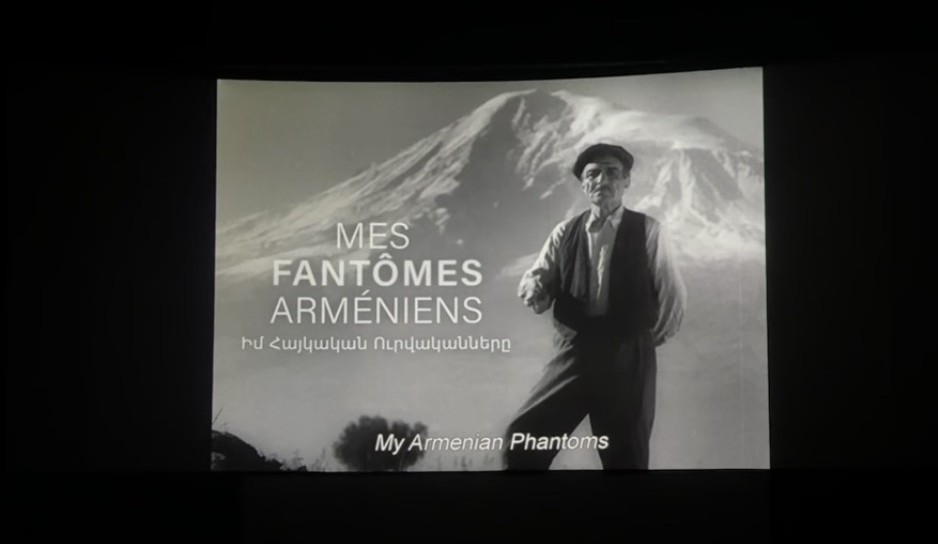
That is how I entered Armenian, Armenian-Soviet cinema — the films created from 1924 to 1990. I realized that we have very powerful pearls, and that it was necessary to take those pearls out, clean them, restore their beauty from 35mm film prints, and show them to the world.
As an Armenian filmmaker living abroad, this was also, in a certain sense, a responsibility for me. We have had an extraordinary cinematography. I often hear people say, “well, that was Soviet.” No, it was not only Soviet cinema. Even during Stalinist repressions, our Armenian directors managed, in a very intelligent and subtle way, to preserve Armenianness.
— The film contains very interesting images from our history, images that have almost never been shown. For example, the unveiling of Stalin’s statue, where, if I remember correctly, your grandmother also appears. How did you work with those archival materials? What difficulties did you face?
— It is quite an interesting and strange story. When I already had the idea of finding the footage of the unveiling of Stalin’s statue, I searched a lot. I went to the National Archive, I went to different places. I found materials of very poor quality — not even HD. Finally, someone told me: try Krasnogorsk, the Russian State Archive of Film and Photo Documents.
My aunt lives in Moscow, and I sent her to Krasnogorsk. After a long search, they managed to find the material. Then, in a very strange way, she was able to send that footage online from Moscow to Paris. It was a rather stressful process.
Of course, we do have preserved archives here; there are materials in good quality, positives, negatives. But it was a huge amount of work. Karina Simonyan, Ophelia Azizyan, and Avag Harutyunyan helped me a great deal. We digitized all of that at Public Television of Armenia. The whole process was done by several people: finding the 35mm film prints, reviewing them, cleaning them, washing them, doing color correction. It was very interesting, but also a very large amount of work.
— As a specialized media outlet, we are also interested in the film’s distribution status. Has the film already been presented to distributors?
— The film premiered this February at the Berlin International Film Festival. It has a very well-known sales agent — not a distributor, but a sales agent who represents the film to the world.
There has been interest from many festivals. Since Berlin, the film has already participated in around 20 film festivals. Before coming here, I was presenting it in France; then there will be Mexico, Australia, Korea, Belgium, and other countries. The film has already had quite an interesting journey and continues to do so.
I think there is interest both in Armenian cinema and in the way the film enters a more collective and historical story through a personal one. The personal, the collective, and the historical are constantly intertwined in the film. That was one of the most important aspects of the work — both in terms of editing and screenwriting.
The film is with ARTE France. Until October, it will mostly be shown at festivals, and from October or November it will be available on television and an online platform. I think it will soon become clear whether it will also have a theatrical release.
— The film mentions the great figures of Armenian cinema — Hamo Beknazaryan, Frunze Dovlatyan, and others. How would you describe them?
— They were very talented, sensitive, and deeply Armenian filmmakers. I truly admire them and have great respect for them, because making cinema in that situation was very difficult.
I not only watched all those films, I also read the archival materials. In the archive, there are folders, for example, on Nahapet. You open them and see how much those people were criticized, how much they were pressured, how much others wanted to cut, remove, change. But they managed to emerge from all of that and create cinema. That is why I am grateful to them and admire their strength as artists. You have to be extremely creative to get through such difficulties and still make good cinema.
— During today’s pitching session, I noticed that you communicated with the participants in a very interesting way. It was as if you were directing the whole moderation process. Did you see it as a kind of film set?
— I myself have participated in many pitching sessions, and I have always felt that in that environment moderators often treat projects very coldly. We, the directors, often go on stage trembling and speak about our projects.
When Nare — Nare-Leone Ter-Gabrielyan, Head of the GAIFF Pro industry platform of the Golden Apricot International Film Festival — suggested that I moderate, I said: I have never done this in my life, but I will try. My first thought was that the directors should feel good. A director spends so much time with their project, their film, goes through so many difficulties, gives their life in order to make that film. And when a cold moderator comes and only says, “hurry up, time is running out,” something is cut inside the director.
I wanted to do everything so that this feeling would not be cut. I wanted to show them that I was by their side, that I was with them, and that they should not be afraid. Directors can break very easily. We need so little to break. I wanted them not to break. I don’t know whether it worked or not, but afterwards they came up to me and thanked me. So perhaps it worked.
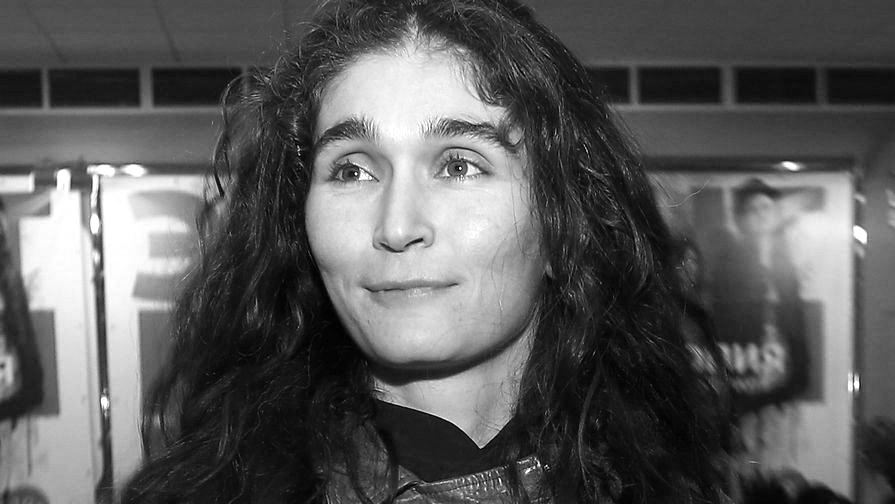
— Your works always have a feminine delicacy, but also strength. Today, women directors are quite active in Armenia. You mentioned that in the past this opportunity almost did not exist. But the precedent of Rosa Frangulyan is interesting. Why was she not mentioned in the film?
— That is a very interesting question. For me, Rosa Frangulyan is more of a documentary filmmaker. She was one of those strong women who managed to do something in a male environment. But if you noticed, in the film I used only fiction films; I did not use documentary films. If I had spoken about documentary cinema, of course I would have spoken about Rosa Frangulyan.
Here I was speaking about fiction filmmaking. In fiction cinema, there were almost no women directors, and there could not have been, because men simply would not have given them their place. At the same time, it is very interesting to think about editors. For me, an editor is the director’s alter ego, and there were many women there.
After the Soviet period, when independence came, I think one of the first strong women directors was Maria Sahakyan. For me, Masha was a revolutionary figure.
— What role did Maria Sahakyan play for you?
— I remember we were in Tbilisi. I had made the short film February 19, and Masha had come with her latest film, Alaverdi, also known as I’m Going to Change My Name. We were having breakfast together, and I asked her: how do you manage? She was only a few years older than me, but she was already making films, she had a family, she had children.
At that time, I did not yet have a child or a family, but I already felt how difficult it was to be a woman and make films in Armenia. Masha said: “If we don’t do it — me, you, the others — then who will?” That day she gave me a lot of strength. She showed me that it was possible. It was as if she took that strength and passed it on to me, saying: go, do it, never be afraid, I am by your side.
And that is how we continued, hand in hand. She was more in fiction cinema, I was more in documentary. It is very sad that she left us so early. If she were here, she would still have had so much to do, so many stories to tell. She was a very talented woman and a wonderful mother.
— The film shows that you grew up in an artistic environment. Even the choice of shots seems to be not about famous scenes, but about images that describe the soul. At first, it seems you were thinking of making a film essay, but then your producer suggested making it more personal.
— More precisely, she did not suggest it exactly like that. When Céline Loiseau read the script for the first time, she said: “On page eight, you speak about your father. For me, that is the most interesting point. Let’s bring it to the first page.”
For me, that was a very big internal struggle. When everything is so personal, and your father has only recently died, you are afraid. You think: will anyone be interested in my father? I understood that the history of Armenia, the history of Armenian cinema, could interest a foreign audience, but I was not sure whether my personal story would interest them.
I think that doubt came from the fact that my father’s death was still very fresh. Céline helped me bring that trauma, that death, that dialogue with my father to the foreground of the film. When you give birth to a child, there is someone who helps the child be born. For me, she played that role: she helped the film be born.
— You recently became the president of the Guild of Documentary Filmmakers of Armenia. This is a very responsible step, especially now, when amendments to the Law on Cinematography are being discussed. What can this stage bring?
— Before speaking about the law, I want to continue the topic of women directors. Today, women are very active in documentary cinema, in animation, and a little less in fiction cinema. And that is very interesting and very pleasing, because at that time there were so few of us, and now there are so many women authors.
We have been stopped so many times that now no one can stop us anymore. Masha’s and my idea was that we must go so far forward, break down so many iron doors, that today’s generation can calmly make its cinema. I am happy that I have been able to contribute my small part to that process.
As for the Guild of Documentary Filmmakers, I understand very well that I have taken on a great responsibility. But I was also happy when it was proposed to me, because it had to be done. Documentary cinema in Armenia is currently experiencing a great rise, and it is absurd that we do not have a separate guild for documentary filmmakers.
I am also part of a documentary guild in France. When I travel to different countries, in some way I represent Armenia — that is, I was already doing this work. Now it simply needs to be formalized. We need to write regulations, understand how we are going to work, create a council, and that system has to rotate. In two years, I should no longer be there; someone else should come. I don’t want to come and sit in the president’s chair. There must be movement.
As for the amendments to the cinema law, I think this is a very sad and serious problem. If we do not stand up now and defend our interests, the situation of Armenian cinema will become very bad — both in Armenia and abroad. If the proposed version moves forward, Armenian cinema may suffer very serious damage.
— So the current law is more acceptable than the amendment that is now being proposed?
— Of course. Under the proposed version, the same foundation — the Cinema Foundation of Armenia — that provides funding also becomes part of the film, meaning that it obtains rights to the film. That does not exist anywhere. Céline and I are now studying the French experience as well, in order to understand how to explain this, because it could simply ruin cinema, destroy it.
That is why we must fight. With our guild, and with all the guilds in general, we are ready to make our voice heard and reach a common position that will be good for Armenian cinema. Armenian cinema is now experiencing a rebirth. It must be continued, not brought down.
— Can one say that the proposed format in some sense resembles a Soviet model?
— Yes, and it can lead to an abyss. We will fight as much as necessary. But I do not want to start a war. We need to negotiate, sit down, talk, understand, and reach a good common position for the sake of Armenian cinema. Otherwise, who will want to co-produce with us? No one.
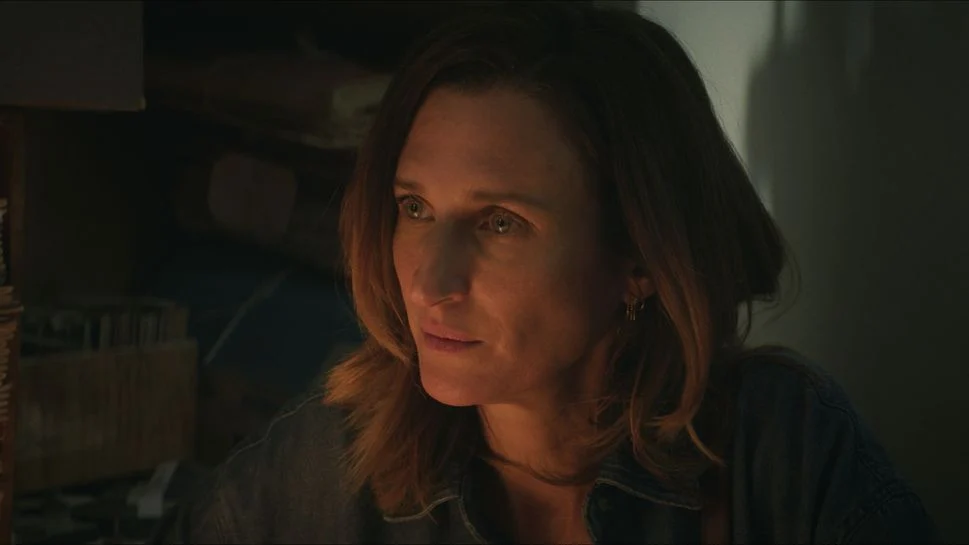
— Finally, let’s talk about your new film. Your latest fiction film, In the Land of Arto, had been selected for the Locarno Film Festival and was to be shown as the opening film at Piazza Grande. That is also, I think, a great responsibility. How was the film made?
— I have been working on In the Land of Arto for more than ten years. The screenwriting process took a very long time. Then we stopped, because we could not find financing; then we started again.
The shooting took place in Armenia in 2024. On these very days, when we are speaking now — the conversation took place in July 2025 — I was shooting last year. I think at that time I was already in Ijevan. For me, it was one of the most interesting processes.
The film is a French-Armenian co-production. A wonderful job was done from the Armenian side: more than 50 Armenian film professionals worked on the film, from the technical crew to the creative team. There was also a team from France — actors, a cinematographer, sound crew. The sets, make-up, and several other departments were from Armenia.
For me, this is a source of pride not for myself personally, but for Armenian cinema. Of course, I am also happy for myself, but that ego no longer interests me. I love collective stories. We are now in a process: today it is me, tomorrow it will be someone else, then another person. The important thing is that we pass this strength on to each other and help one another. If everyone sits inside their own ego, we will not get anywhere.
— Which actors are involved in the film?
— The film has French, Iranian, and Armenian actors. Among the Armenian actors are Shant Hovhannisyan, Babken Chobanyan, Alexander Khachatryan, as well as actors from theatres in Gyumri and Yerevan. The work with all the Armenian actors was wonderful.
The film also features Camille Cottin, Zar Amir Ebrahimi, Hovnatan Avetikyan, and Denis Lavant. It was a true co-production situation.
The work with the actors was very interesting. They were all very professional. They have acted in far more films than I have directed — this is my first fiction feature, while for them it might have been their 30th or 40th film. I learned a great deal from them.
Everything was very immediate and very united. There was no “you are French,” “you are Armenian,” “one is better than the other.” For two months, we lived together, worked together, cried, laughed. I think that is exactly the magic of cinema.
When I acted as a child in Edgar Baghdasaryan’s film, I was seven or eight years old. That was where I first felt the magic of cinema. Since then, something entered me, and I kept thinking: will I one day be able to find myself in that magical situation and pass it on to others?
In the Land of Arto: from Locarno to Armenian audiences
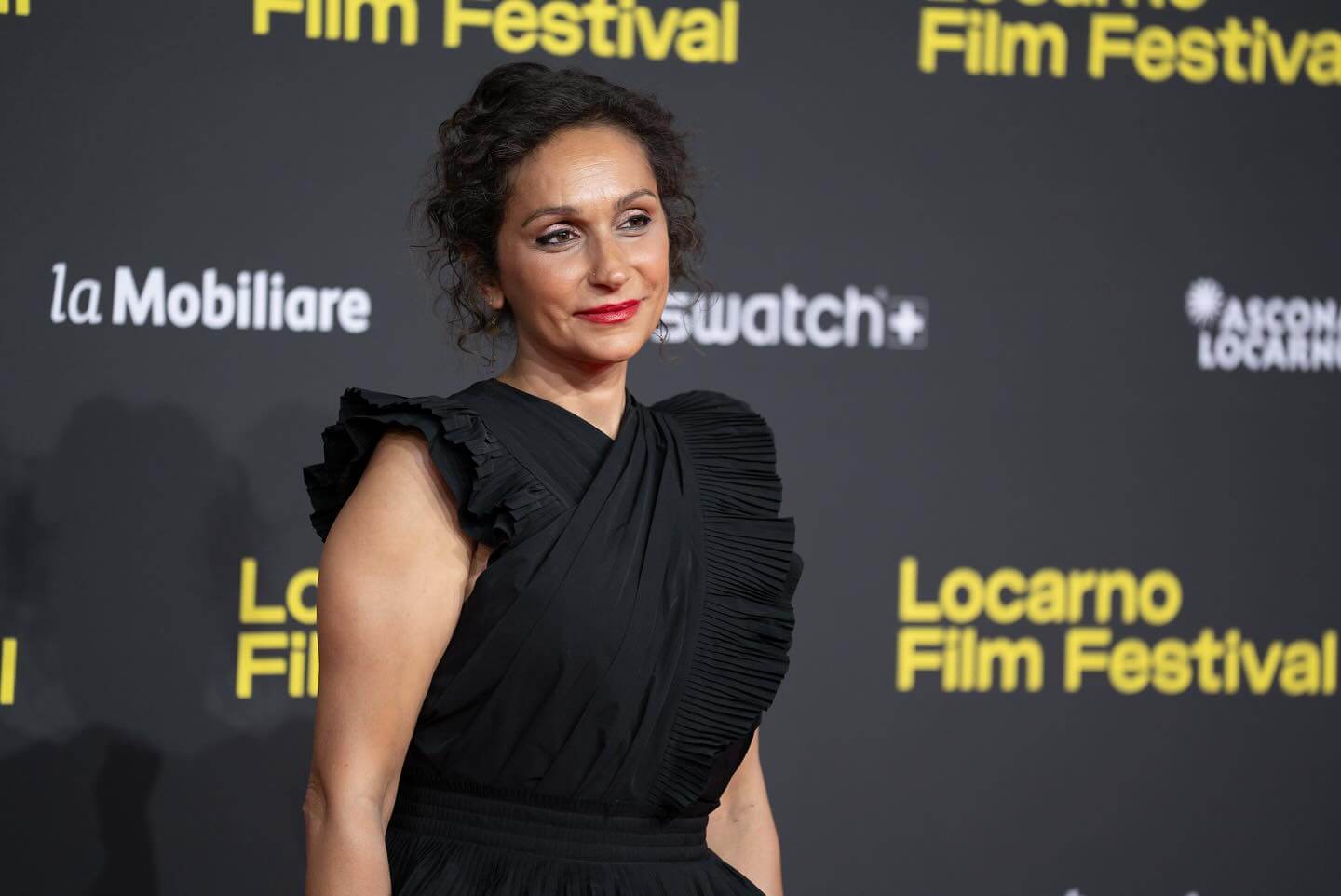
Later, In the Land of Arto had its world premiere at the 78th Locarno Film Festival. The film opened the Piazza Grande programme and was presented before an audience of thousands. During Golden Apricot, Tamara Stepanyan had already emphasized that the presence of Armenian cinema on a platform such as Locarno was, for her, first and foremost not a personal achievement, but an achievement for Armenian cinema.
According to the director, In the Land of Arto is very different from My Armenian Phantoms: it is her first fiction feature. At the same time, there are internal connections between the two films — the themes of trauma, nostalgia, leaving Armenia, and the impossibility of return. My Armenian Phantoms returns to the archives of Armenian cinema and family memory, while In the Land of Arto transfers the impossibility and pain of that return into the space of fiction cinema.
The film, a French-Armenian co-production, was shot in Armenia with the participation of Armenian and French film professionals. Stepanyan emphasized that this work is important to her also as a collective experience: not only as her own film, but as a process in which Armenian cinema can be present on international platforms and continue that presence with renewed strength.
After its festival journey, In the Land of Arto is also expected to meet Armenian audiences. During the discussion, it was stated that the film should be presented within the framework of the 23rd Golden Apricot Yerevan International Film Festival in 2026. If in 2025 Golden Apricot became the Yerevan platform for the encounter with My Armenian Phantoms, then In the Land of Arto comes to Armenia after its international premiere in Locarno — as Tamara Stepanyan’s first fiction feature and as an important result of Armenian-French cinematic cooperation.
Interview by Sergey Ovsepyan.

